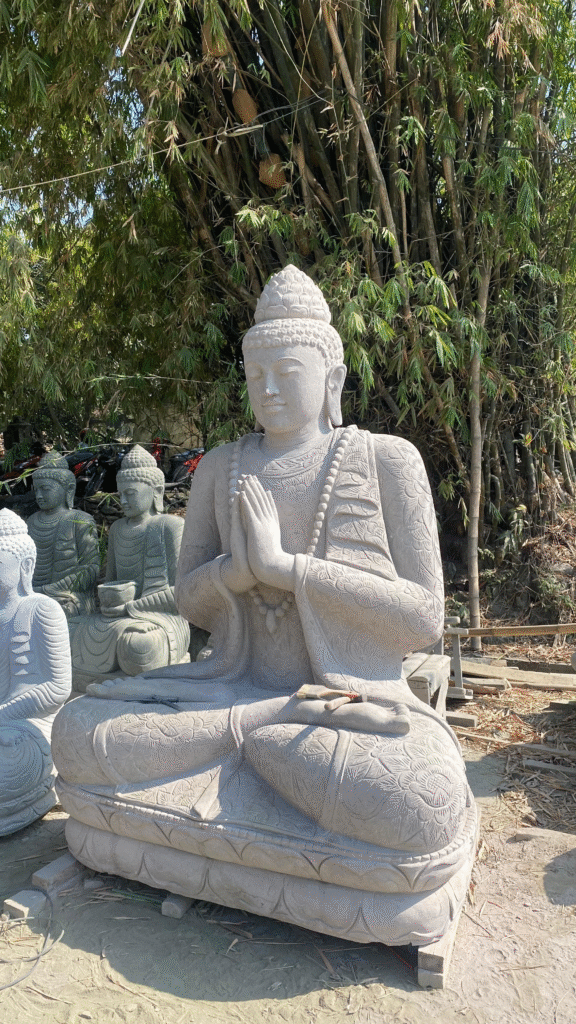
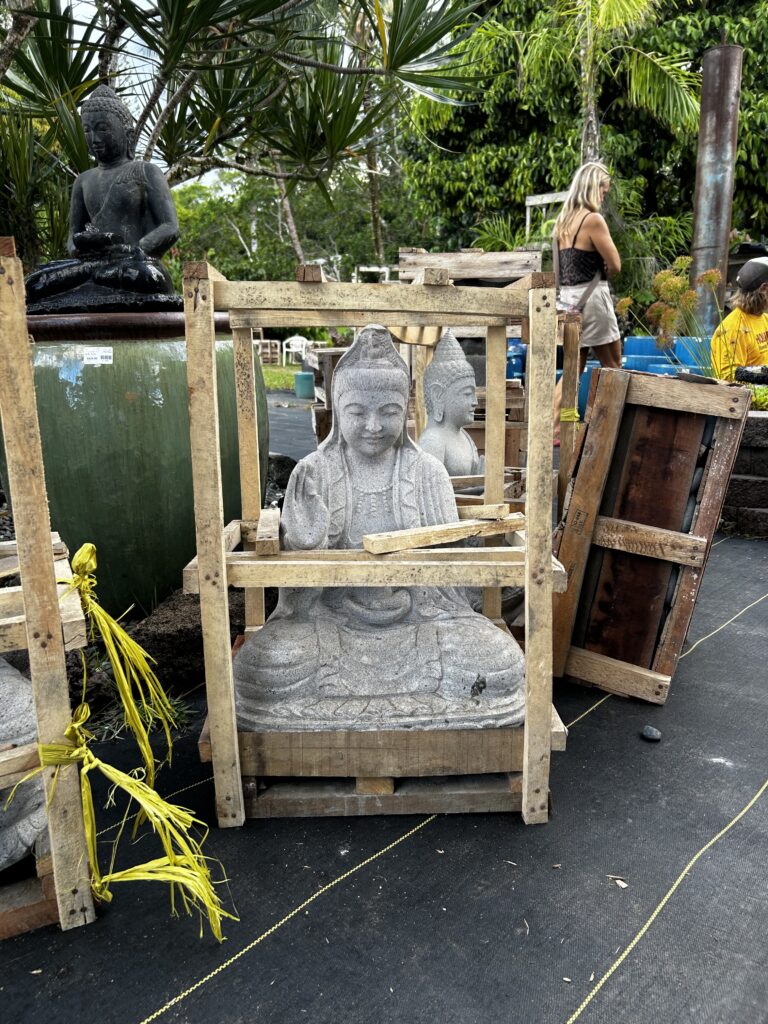
At Garden Ponds, we’ve seen how a thoughtfully chosen statue can transform a garden into a sanctuary of peace and meaning. Among the most beloved figures we carry is Quan Yin (also known as Kwan Yin, Kuanyin, or Guanyin), the Bodhisattva of Compassion. With a new shipment arriving next week of hand-carved stone statues, paros vessels, lanterns, and a giant stone buddha of epic proportions, we invite you to discover how the addition of a statue such as the featured Quan Yin or Buddha can bring serenity and balance into your home or garden

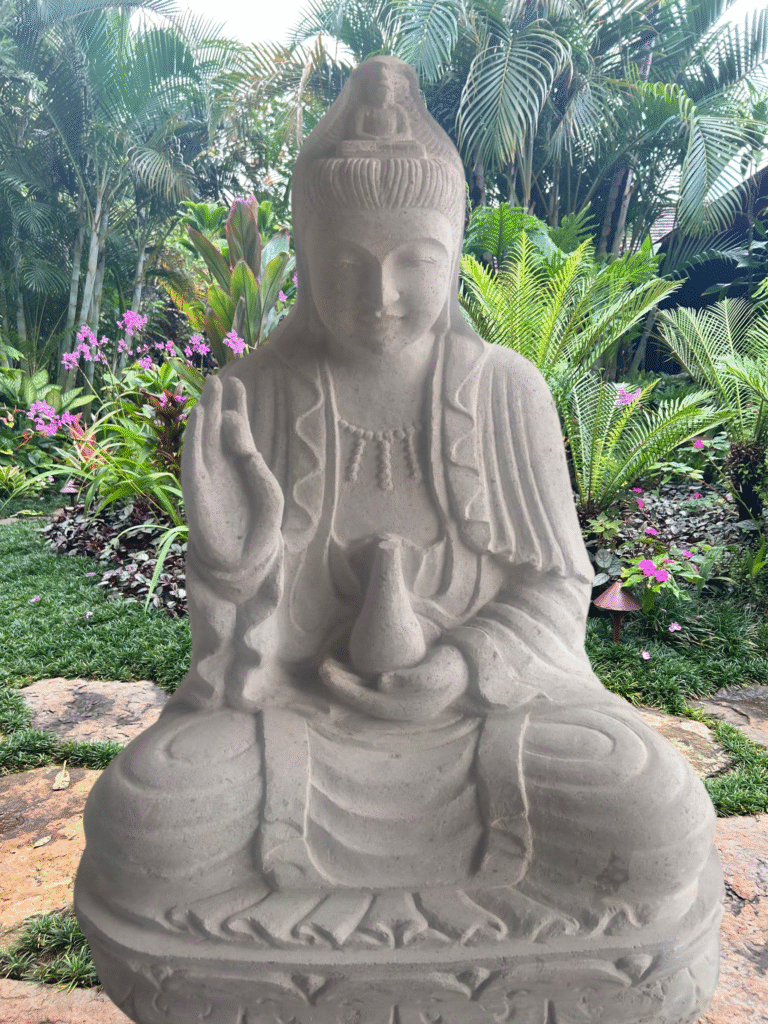

Who Is Quan Yin?
Quan Yin is one of the most revered figures in East Asian Buddhism. Her name translates as “The One Who Hears the Cries of the World.” She is honored as the embodiment of mercy and compassion, known for answering the prayers of those who suffer.
Originating from the Indian bodhisattva Avalokiteshvara, Quan Yin became a central figure in China by the 5th century AD and later across East Asia. She is celebrated as a Bodhisattva—an enlightened being who has chosen to remain in the world rather than enter nirvana, dedicating herself to guiding and comforting others.
She is especially regarded as a protector of women, children, families, and those at sea, offering reassurance in times of fear and uncertainty.
Symbols of Quan Yin
Quan Yin is depicted in many forms, each filled with symbolic meaning:
- The Lotus Blossom – A sign of purity, rising unscathed from the mud to bloom in the light, reminding us that compassion can emerge from hardship.
- The Dragon – Representing wisdom and life force, the dragon highlights her connection to water and her role as a guardian.
- The Vase of Water – A vessel of pure water symbolizing renewal, healing, and compassion flowing to all beings.
Her posture also carries meaning. A seated Quan Yin reflects calmness and meditation, while a standing figure often symbolizes guardianship and protection.
Quan Yin in the Garden
Placing Quan Yin in a home or garden is more than decoration—it is a practice of inviting compassion, peace, and mindfulness into daily life. She may be placed at the entrance of a garden, or quiet contemplation place, near ponds, fountains, or streams, where the sound of water enhances her association with renewal and healing. Surrounded by lotus or waterlilies, her presence reflects purity and spiritual awakening.
Wherever she is placed, Quan Yin offers a reminder that compassion softens hardship and creates harmony.
The Beauty of Stone
Our Quan Yin statues are hand-carved from natural stone by skilled artisans with the creative concept of “Taksu”. In Bali, the word Taksu describes a spiritual power or resonance that allows art and nature to touch the soul. It is not easily translated, but it refers to the life force or charisma that gives a piece of art its ability to deeply move and inspire. For art to embody Taksu, the maker must connect with something greater than themselves, allowing the spirit of the material to flow through. Each piece is unique, with weight and permanence that root it deeply into the landscape. Unlike mass-produced replicas, stone statues weather gracefully—gaining character with moss, rain, and sunlight—so that over time, they become part of the landscape itself.
Our collection includes both serene, seated figures and standing forms, some accompanied by flowing robes and dragons. Each is a timeless symbol of compassion, strength, and protection.
Larger Than Life: “The Great Stone Buddha”
Alongside Quan Yin, we are honored to feature a monumental stone Buddha over six feet tall—the largest statue we’ve ever had carved. This serene figure radiates presence on a grand scale, offering a grounding focal point for a meditation garden, temple, or retreat. Its stillness embodies strength, while its size serves as a powerful reminder of the vastness of peace.
Enduring Presence
Much of the collection we carry is hand-carved from natural stone by artisans who honor traditional craftsmanship. Unlike mass-produced pieces, stone carvings weather gracefully, softening with time until they feel as though they have always belonged.
Whether it is the compassionate gaze of Quan Yin or the monumental presence of the great stone Buddha, these works of art are more than objects. They embody Taksu, serving as markers of peace and compassion—lasting reminders of the beauty that arises when nature, art, and spirit come together.